For system designers: a mechanical level switch instead of a capacitive probe
If you design the controls for a silo, dryer or conveyor plant, level switches are a small line in the budget and a surprisingly large item at commissioning. Here is the difference between choosing a mechanical diaphragm switch and an electronic probe, seen from the designer's side.
Wiring
A diaphragm switch gives a volt-free changeover contact from a microswitch rated 125 VAC / 15 A or 24 VDC / 0.5 A. It goes directly to a digital input without an interposing relay, without a supply to the switch and without an analog card.
A capacitive probe needs a supply, often an interposing relay or amplifier, and sometimes separate cable routing to avoid interference. The difference is a few terminals and a line in the bill of materials, per level point.
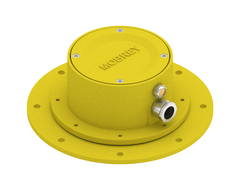
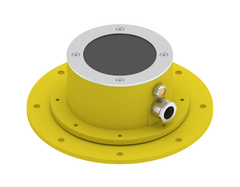
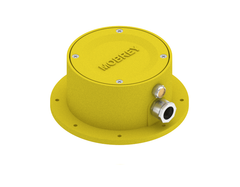
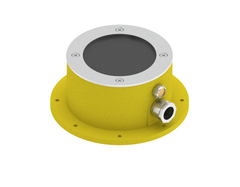
The switch itself is a closed housing in stove-enamelled die-cast light metal with a PG11 cable gland, so it needs no enclosure of its own in the plant.
Commissioning
This is where the cost is. A capacitive probe is set up against the actual material, which requires the plant to be filled while you are on site. If it is not, you have to come back. Vibrating forks are simpler but need checking against coating.
A diaphragm switch has nothing to set. You mount it, connect the contact and function-test it by pressing the diaphragm. You can do that in an empty plant.
During the warranty period
False alarms from level probes are a classic warranty call-back, and the cause is nearly always the same: the material has changed. The moisture in wood chips varies with the season, the feed recipe changes, a new supplier delivers a different fraction. A capacitive probe notices; a mechanical switch does not.
Specification
| Article no. | Model | Use | Enclosure |
|---|---|---|---|
| 181-0509 | NV14P | Silo and bin, wall mounting | IP54 |
| 181-0511 | NV14P-KM | As above, mounting inside the bin | IP65 |
| 181-0507 | NV10P | Overflow protection on conveyors | IP54 |
| 181-0505 | NV10P-KM | As above, mounting inside | IP65 |
Common to all four: nitrile rubber diaphragm, housing in stove-enamelled die-cast light metal, cable entry with PG11 gland, diaphragm travel about 3–4 mm with built-in overload protection, weight 0.8 kg, operating temperature +1 to +60 °C.
Documentation for your design
Datasheets and dimensions are on each product page. All four articles are in stock in Årsta, Stockholm, with delivery in 1–2 working days. For a whole plant we quote volume prices from 5 units.
Elniva switches are for dry bulk solids only. They are not for liquids or pressure vessels, and they are not ATEX certified. In dusty areas with a risk of dust explosion, check the zone classification before choosing a switch.
info@levelswitchsweden.com · +46 8 32 33 00