Where to mount a level switch: the right height in a silo
A level switch can only react to material that actually presses against it. The right height is therefore not where the level should be in the middle of the silo, but where the material reaches the wall at that level.
High level: account for the fill cone
When a silo is filled from the top centre, the material forms a cone. The top of the cone is higher than the edge where it meets the wall. The height difference is roughly the silo radius multiplied by the tangent of the material's angle of repose. In a silo with a 3 m radius and a material with a 30° angle of repose, the top of the cone is about 1.7 m higher than the wall contact.
Mount the high level switch so that the wall contact reaches it while the top of the cone is still below the roof and the inlet. Then leave margin for the material that is already in the conveyor when the switch trips.
Stay out of the inlet stream
A switch that is hit by the falling stream gives false signals and wears faster. Place it to the side of the inlet, where the material arrives by building up, not by falling.
Low level: account for the outlet funnel
Many silos empty through the middle first while the material at the wall stays put. Mount the low level switch high enough above the outlet cone that it is uncovered while there is still enough material left for the warning to be useful.
Conveyors
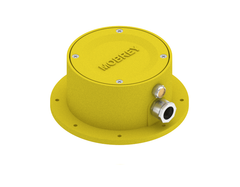
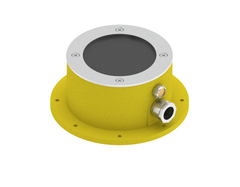
On screw, belt and elevator conveyors, the NV10P goes at the point where material backs up first when the discharge is blocked, typically at or just before the discharge spout.
Service access
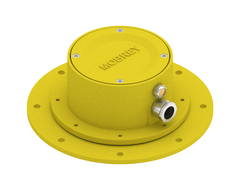
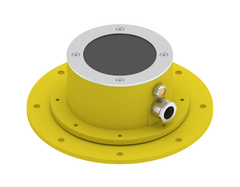
The NV14P is flange-mounted through the wall, so it can be reached and function-tested from the outside. If the switch has to sit inside the material, use the NV14P-KM and plan how you will reach it.
Send us a sketch with silo diameter, inlet position and material, and we will suggest positions: info@levelswitchsweden.com or +46 8 32 33 00.