Level measurement for bulk solids: a practical overview
Bulk solids are harder to monitor than liquids. They form cones and funnels, bridge, coat and change moisture. This overview sums up what matters and links to the detailed articles.
Point or continuous
A level switch gives an on/off signal at one point: stop filling, warn of low level, stop a blocked conveyor. A level transmitter, such as radar or load cells, follows the level all the time and is used for stock control. Most plants need switches; some also need a transmitter. More: level sensor vs level switch.
Where to measure
Typical points are the silo top and bottom, the intake pit, the dryer, the conveyor discharges and the loading bin. See six common installation points.
How high to mount
A switch must sit where the material reaches the wall, not where the level is in the middle. Account for the fill cone, stay out of the inlet stream and allow for the outlet funnel. See where to mount a level switch.
Which technology
Diaphragm switches, rotary paddles, vibrating forks and capacitive probes all detect a point, in different ways. Where moisture and material vary, a principle that needs no setting has an advantage. See types of level switches compared.
What goes wrong
False alarms and missed stops usually come from the fill stream, bridging, coating or changing moisture. See how to avoid false alarms.
Keeping it working
A mechanical switch can be tested by hand in a few minutes. See how to test a level switch.
Elniva
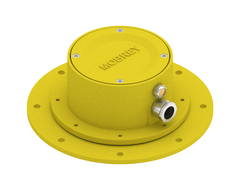
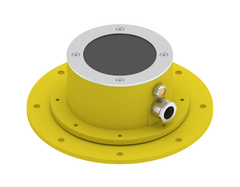
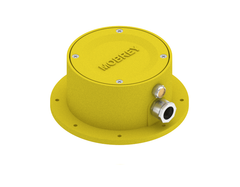
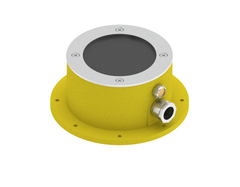
Elniva switches are mechanical diaphragm switches for dry bulk solids: NV14P and NV14P-KM for silos and bins, NV10P and NV10P-KM for conveyors. All data on the technical facts page.
Elniva switches are for dry bulk solids only. They are not for liquids or pressure vessels, and they are not ATEX certified. In dusty areas with a risk of dust explosion, check the zone classification before choosing a switch.
Tell us the material and where the switch will sit, and we will recommend a model: info@levelswitchsweden.com or +46 8 32 33 00.